In his chapter “The
Googlization of Us” from his book The Googlization of Everything, Siva Vaidhynathan
focuses on the way in which Google takes advantage of its users by gathering
their personal information and using it to profit. Some users are unaware of this
data collection, and would have to sift through a lengthy privacy policy to
discover what they’re actually sharing with the tech giant. Regarding this
privacy policy, Vaidhynathan says “If you read the privacy policy carefully, it’s
clear that Google retains the right to make significant decisions about our
data without regard for our interests” He further argues that any semblance of
privacy or protection of users is built on the potential to profit off of them,
and if that potential were to disappear likely so would that protection. Overall
he paints a largely negative view of Google, claiming that, although the
company provides useful and free features to its users, like any company its main
goal is to make money. If that involves collecting large amounts of user data
and tracking their searches, so be it.
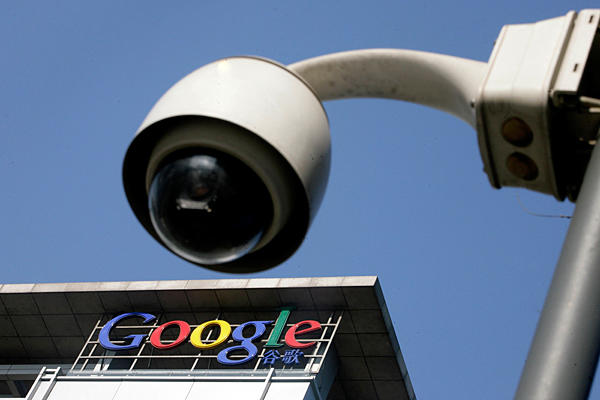
After this year’s
events surrounding the NSA’s surveillance habits, people have started paying
more attention to the government’s level of interest in their lives. They would
probably not be surprised then to find that government requests to Google foruser data have drastically increased in the past three years. Google isn’t shy
about publicizing this information, either. Although the corporation makes it
clear that some information they are legally prohibited from sharing, it has
published the statistics for each country’s government data requests, and how
many produce the data. The United States is in the lead by far with almost
11,000 requests within 6 months, followed by India with 2,600. The US also
produces data in more cases than every country listed; about 84% of the time. Some
requests, apparently, they are not allowed to publish, such as those related to
the Foreign Intelligence Surveillance Act, and so these numbers may not be
entirely accurate. One thing seems certain though, which is that Google is not
happy with this arrangement. It seems to resent the fact that it not only has
to hand over its data, but is not allowed to fully report on exactly what it
handed over. Considering the fact that Google has done its fair share of
surveillance, one must wonder why exactly it is so bothered now.

As Vaidhynathan
made clear in his chapter “The Googlization of Us”, Google has no qualms about
collecting its users’ data. Although there are options to minimize the amount
of data collected and tracking preformed, it is not the default and many users
are unaware of it. It is also impossible to eradicate data collection fully.
Given this, it might seem a bit hypocritical for Google to get so upset over
the Government requesting data and then not letting them publish all the statistics.
After all, how much does Google publicize its own data collection statistics?
In this situation, Google also comes away seeming like the protagonist who is
valiantly defending the citizens of the United States against the Government’s
unjust and infringing surveillance practices, which seems rather convenient: they
get to clean up their image and harp on the Government, which lately everyone
loves to do. What could go wrong? Perhaps it’s unfair to be so hard on Google.
After all, Google users accept the privacy policy when they use its services
(whether they know what it entails or not), whereas they have no knowledge nor
can they give consent when the Government requests their data. However, let one
more thing be said: most of the Government’s requests to Google are subpoenas
and warrants, and thus related to legal proceedings, where Google was making
them out to be random requests for an average citizen’s browsing history.

No comments:
Post a Comment