Tuesday, November 26, 2013

Revision: Social Networking and Racism

In the article “Theorizing Race and Racism on the Web” Jesse Daniels examines how digital interactions can lead to racism despite the perceived “facelessness” of the internet, as well as how this affects online communities where identity often develops. At one point in the article he specifically focuses on how interactions on social networking sites can reveal and lead to racism, sometimes without the perpetrator being aware of it, such as when it is unconscious. The two main sites discussed in the article were MySpace and Facebook. Regarding the two, Daniels says “Watkins found that the same racialized language used to differentiate between safe and unsafe people and communities was used to describe Facebook and MySpace” (8). The “white flight” from MySpace to Facebook made people think they were joining a cleaner, friendlier website as they left an inferior one behind. In reality, it was only as clean as they made it.
Recently, the police in Norfolk, England were contacted after a person posted a racist comment on a banter/insult Facebook page for soccer team managed by a black man. The comment was removed but not before being reported as a hate crime to police by an anti-racism group. The club seems to be attempting to separate itself from the incident, reiterating that it is not affiliated with the Facebook page, the page is not official for the team, etc. The target of the racist comments, Chris Hughton, had made no official statement or acknowledgment at the time of the article's posting.
A Norwich and an Ipswich player (the two teams on the banter/insult Facebook page)
Although this is only one example, it seems a recurring theme that it is, in actuality, Facebook that is “trashy”, and certainly not “clean” or “trustworthy” like people initially thought. There have been several articles regarding racism on Facebook recently, and almost all of the perpetrators were white. Many of them were contacted by the police for hate-crime related sentiments. Some, however, were just disrespectful without actually being threatening, leaving others to marvel at their ignorance. The fact that the move from MySpace to Facebook is called “white flight” in itself implies that these white users fled the more racially diverse scene of MySpace in lieu of  the monoculture of Facebook—they found a ‘whiter’ place to exist online, and thus exhibit signs of racism themselves. Although digital demographics are able to shift very quickly, Daniels assumption that Facebook is more ‘white’ may still hold true. What does not hold true is some users’ assumptions that Facebook is a superior, cleaner site due to its white presence, or that MySpace is ‘ghetto’ because it is diverse.  


Does It Matter If Anonymous Is Paradoxical?

In her article "Our Weirdness is Free: The Logic of Anonymous", Gabriella Coleman examines how the hacker group Anonymous has morphed from 4Chan-based trolls to social and political activists standing up for the rights of others. Despite the seeming nobility of Anonymous’s new form, Coleman is careful to point out that, while they may appear to be noble on the surface, Anonymous actually has a contradictory and disparate nature. They engage in petty pranksterism with those they do not agree with, sending unpaid pizzas to their houses and prank calling them. They at once act mature yet like children, making it difficult to definitively define them as good, bad, or existing in some state of moral ambiguity in which the subject only does what they want.  Despite the paradoxical nature of their character, Coleman shows that Anonymous is also capable of defending free speech, advocating for human rights, and seeking to better the world. Anonymous’s more positive side was again showcased earlier this year in the publicizing of a much-ignored rape case in Steubenville, Ohio.
New arrests have been made in a case where in 2012, two football players from Steubenville High School sexually assaulted a drunk girl at a party. Despite the evidence, little action was taken and the case did not receive much media attention. Four months later, Anonymous heard about it and helped the case garner the attention it needed to get national news coverage. Anonymous and Knight Sec members found and posted video and photographic evidence of the crime online, making it impossible for authorities or media to ignore. These actions were likely not entirely legal, if one man's claims of having his house raided by the FBI looking for evidence of the hacker groups is to be believed. The two boys were charged and detained, likely until they turn 21. Now, four officials have been charged in connection with the case. A superintendent and three other school employees were charged with varying counts and may face jail time. 

Amongst claims that Anonymous still has roots as a trolling group who strives for lulz, their actions in the Steubenville case prove that, even if this is true, it is not what needs to be focused upon. Whether or not Anonymous has trolled people before is insignificant considering the substantial role they played in bringing the Steubenville case to the media’s attention and exposing the lack of action surrounding it. Without Anonymous’s participation, it is unlikely the case would have made national news or gotten the attention it did, and thus it is highly unlikely that these officials would have been charged at all. They would still be in schools, working with children when, according to the charges, the individuals allow underage drinking and contribute to delinquency, as well as fail to report child abuse, among other charges. So while Anonymous may have a paradoxical character as Coleman puts it, they also do a lot of good. They help people who have been wronged because they believe it’s the right thing to do, not because they have ulterior motives of trolling and getting lulz. When it comes down to it, although the overall character of Anonymous may be difficult to judge, their actions viewed individually show that they are capable of more than people think. 

Sunday, November 17, 2013

Google vs. the Government

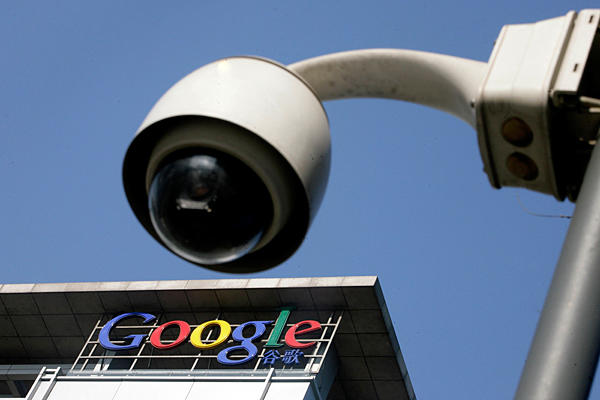
In his chapter “The Googlization of Us” from his book The Googlization of Everything, Siva Vaidhynathan focuses on the way in which Google takes advantage of its users by gathering their personal information and using it to profit. Some users are unaware of this data collection, and would have to sift through a lengthy privacy policy to discover what they’re actually sharing with the tech giant. Regarding this privacy policy, Vaidhynathan says “If you read the privacy policy carefully, it’s clear that Google retains the right to make significant decisions about our data without regard for our interests” He further argues that any semblance of privacy or protection of users is built on the potential to profit off of them, and if that potential were to disappear likely so would that protection. Overall he paints a largely negative view of Google, claiming that, although the company provides useful and free features to its users, like any company its main goal is to make money. If that involves collecting large amounts of user data and tracking their searches, so be it.

After this year’s events surrounding the NSA’s surveillance habits, people have started paying more attention to the government’s level of interest in their lives. They would probably not be surprised then to find that government requests to Google foruser data have drastically increased in the past three years. Google isn’t shy about publicizing this information, either. Although the corporation makes it clear that some information they are legally prohibited from sharing, it has published the statistics for each country’s government data requests, and how many produce the data. The United States is in the lead by far with almost 11,000 requests within 6 months, followed by India with 2,600. The US also produces data in more cases than every country listed; about 84% of the time. Some requests, apparently, they are not allowed to publish, such as those related to the Foreign Intelligence Surveillance Act, and so these numbers may not be entirely accurate. One thing seems certain though, which is that Google is not happy with this arrangement. It seems to resent the fact that it not only has to hand over its data, but is not allowed to fully report on exactly what it handed over. Considering the fact that Google has done its fair share of surveillance, one must wonder why exactly it is so bothered now.


As Vaidhynathan made clear in his chapter “The Googlization of Us”, Google has no qualms about collecting its users’ data. Although there are options to minimize the amount of data collected and tracking preformed, it is not the default and many users are unaware of it. It is also impossible to eradicate data collection fully. Given this, it might seem a bit hypocritical for Google to get so upset over the Government requesting data and then not letting them publish all the statistics. After all, how much does Google publicize its own data collection statistics? In this situation, Google also comes away seeming like the protagonist who is valiantly defending the citizens of the United States against the Government’s unjust and infringing surveillance practices, which seems rather convenient: they get to clean up their image and harp on the Government, which lately everyone loves to do. What could go wrong? Perhaps it’s unfair to be so hard on Google. After all, Google users accept the privacy policy when they use its services (whether they know what it entails or not), whereas they have no knowledge nor can they give consent when the Government requests their data. However, let one more thing be said: most of the Government’s requests to Google are subpoenas and warrants, and thus related to legal proceedings, where Google was making them out to be random requests for an average citizen’s browsing history. 

Sunday, November 3, 2013

Honeypots and Piracy

In the chapter “Six Faces of Piracy” by Ramon Lobato, Lobato discusses digital piracy within the context of theft, free enterprise, free speech, authorship, resistance and access. Aside from the section on theft, his portrayal takes on a largely neutral and sometimes positive form, leading the reader to believe he is likely not opposed to piracy, or at least does not actively advocate against it. Since the MPAA propagates a one-sided, completely negative view of piracy and is almost equally opposed by  pro-piracy advocates, Lobato’s expansion of piracy from its two dimensional playing field is refreshing. However, even though his commentary on the societal implications of piracy within a subtly technologically oppressed regime is insightful, people still tend to focus almost exclusively on piracy as theft. In fact, some people will go to great lengths to reinforce this concept, as one company has revealed.


            Recently, the owner of the file-sharing site UploaderTalk.com revealed that the site was a honeypot designed to accumulate information about users and the file and web hosts. It has since been purchased by the anti-piracy company Nuke Piracy, and the owner claims to be working for the company now.  The owner, WDF, seems quite proud of his operation, declaring “I collected info on file hosts, web hosts, websites. I suckered shitloads of you”. WDF used to be a moderator of another file-sharing site, WJunction, where members could make money from uploading content. It is unclear if members could do the same at UploaderTalk, but based on the small member population (around a thousand) it seems unlikely. WDF has not yet announced what will be done with the information gathered during the sites one-year run, but it is likely not going to be good for its members. It seems obvious that WDF and Nuke Piracy take the viewpoint of piracy as theft, however, in congratulating themselves they have conveniently avoided the fact that UploaderTalk encouraged piracy.

UploaderTalk would've been a Facilitator
            Until it was announced that UploaderTalk had been a honeytrap, it had been a file-sharing website where members could upload and download largely pirated content. According to WDF, this certainly constitutes theft and is therefore wrong. However, he does not take into account that he is the one who made it all possible; he created the site, therefore he enabled all the activities that occurred under its domain. Doesn't this make him guilty as well? He went to great lengths to set up an operation that would “catch” distributors of pirated content, but in the process he ensured that content would be accessible to more people. The MPAA makes the issue of piracy seem like “good guy” versus “bad guy”, with them and their anti-piracy counterparts playing the roles of “good guys” in their attempt to expunge piracy from the face of the Earth. However, as WDF has proved, it is rarely that simple. As Lobato pointed out, the financial losses to the media industry due to piracy, while often exaggerated, remain substantial. Isn’t there a better way for anti-piracy groups to go about their mission without deceiving and entrapping users who are completely unaware of their ulterior motives? Two wrongs don’t make a right, and here it looks like no one comes out on top. 


Sunday, October 20, 2013

Rise of the Honey Badger


In a chapter of A New Literacies Sampler titled ‘Online Memes, Affinities, and Cultural Production’, the author illustrates the parameters for a meme as well as several examples of qualifying pieces of media. Although he is careful to clarify that a meme does not need to be media (memes have existed far longer than modern technology) today’s memes are generally viral media content that spread quickly from person to person, not unlike the biological spread of a virus.  According to Richard Dawkins, a meme must have longevity, fidelity, and fecundity in order to be successful; that is, the length it can survive, its replicability, and the rate the meme is copied and spread.
One example of a popular meme is the video “The Crazy Nastyass Honey Badger” narrated by Randall, which has over 63 million views on YouTube.


           The video consists of footage from a nature documentary about the honey badger with a humorous voiceover by Randall. It went viral after being posted in 2011, even being referenced in television and by famous athletes who announced they would emulate the honey badger’s attitude of  “take what you want regardless of others” and “Honey Badger don’t give a shit”. There were several similar videos preceding “The Crazy Nastyass Honey Badger”, but none of them received as much media attention as Honey Badger did. They were all variations on the theme of a comedic voiceover of nature documentary excerpts, some examples of which are “I Hate Nature” and  “Fuck Planet Earth”.


 “I Hate Nature” is considered by Know Your Meme to be the earliest precursor to Honey Badger. However, “Spiders on Drugs” is also reminiscent of the Honey Badger video’s style, and was uploaded in 2006 with currently over 34 million views on YouTube. “The Crazy Nastyass Honey Badger” video itself has not changed over the years, however, due to its success and viral spread the narrator created a series of similar videos titled “Randall’s Wild Wild World of Animals”. Randall has also created commercials in the same narrative style and narrated a commercial for the television show Mythbusters, among other things.

            “The Crazy Nastyass Honey Badger” video fits Dawkins’ parameters of meme success; fidelity, longevity, and fecundity. Due to its unique narration style the video is certainly memorable, and the layout (comedic voiceover to nature scenes) is easily replicated by others who may wish to create similar videos. It certainly was not difficult for Randall, as “Randall’s Wild Wild World of Animals” has over 160 videos, some of which feature Randall singing popular songs in the same tone and style he used for Honey Badger, titled “Honey Badger Sings”. Other users have created songs and remixes to the Honey Badger video, and a series of photographic memes have also sprung up.


            The video also possesses longevity; even though it is no longer so viral, it is still a highly viewed video and views continued to spike a year after its release. More so, its longevity exists in the people who have seen the video; although it is likely better known among young people, a huge number of people know what Honey Badger refers to and likely will for a long time. Finally, its fecundity is undeniable; it spread quickly from erson to person, largely due to its carefree comedic element. Additionally, since the video is only 3 ½ minutes long, it was not difficult for people to show their friends which also contributed to its spread.

Sunday, October 6, 2013

Social Networking and Racism

In the article “Theorizing Race and Racism on the Web” Jesse Daniels examines how digital interactions can lead to racism despite the perceived “facelessness” of the internet, as well as how this affects online communities where identity often develops. At one point in the article he specifically focuses on how interactions on social networking sites can reveal and lead to racism, sometimes without the perpetrator being aware of it, such as when it is unconscious. The two main sites discussed in the article were MySpace and Facebook. Regarding the two, Daniels says “Watkins found that the same racialized language used to differentiate between safe and unsafe people and communities was used to describe Facebook and MySpace” (8). The “white flight” from MySpace to Facebook made people think they were joining a cleaner, friendlier website as they left an inferior one behind. In reality, it was only as clean as they made it.

Recently, the police in Norfolk, England were contacted after a person posted a racistcomment on a banter/insult facebook page for soccer team managed by a black man.  Although this is only one example, it seems a recurring theme that it is, in actuality, Facebook that is “trashy”, and certainly not “clean” or “trustworthy” like people initially thought. There have been several articles regarding racism on Facebook recently, and almost all of the perpetrators were white. Many of them were contacted by the police for hate-crime related sentiments. Some, however, were just disrespectful without actually being threatening, leaving others to marvel at their ignorance. Although digital demographics are able to shift very quickly, Daniels assumption that Facebook is more “white” may still hold true. What does not hold true is those users’ assumptions that it is a superior site and their presence makes it better.